The art of buying in Morocco
Few experiences feel as quintessentially Moroccan as wandering the souks and buying something, yet for many travellers the idea of haggling stirs a little anxiety. At Maktub Morocco Tour we want to take the fear out of this custom, because bargaining is not a confrontation but a social game full of charm, an essential part of the country’s commercial culture that, with the right approach, is thoroughly enjoyable.
In Morocco’s souks, especially for crafts, textiles, leather, spices and souvenirs, prices are rarely fixed, and negotiating is part of the process and even expected of you. Understanding how this dance of offers and counteroffers works lets you buy with confidence, at a fair price, and above all with a smile. This guide gives you all the keys to bargain with ease, from why the custom exists to the practical rules of the game. Our 7 Day Morocco Tour Itinerary From Fes include time to explore and shop in the fascinating Moroccan souks.
Why haggling exists
First, it helps to understand that haggling is a deeply rooted cultural tradition, not an attempt to cheat the tourist. For centuries, negotiation has been the normal way to trade in the markets, a social exchange as much as an economic one, in which the human rapport matters as much as the final price. Not taking part means missing a genuine cultural experience. The back-and-forth is a small social ritual in its own right, and stepping into it is part of truly experiencing the market.
The seller opens with a high price expecting you to bargain, and the goal is to reach a point where both parties are happy. Far from being hostile, the negotiation usually unfolds with humour, courtesy and often a glass of tea. Seeing it as a friendly game rather than a conflict changes the whole experience. It is culture, not battle. Once you grasp that, the tension melts away and you begin to enjoy the negotiation as much as the object you end up carrying home. Approaching the whole thing as a friendly game changes everything. Our 12 Days In Morocco Tour Itinerary From Casablanca help you approach haggling with exactly the right attitude.
The rules of the game
A few practical guidelines make haggling flow. First, do not show too much enthusiasm for an item, so as not to weaken your position. Second, have a sense of the price you are willing to pay and, as a common rule of thumb, open your first counteroffer well below the starting price, leaving room for the negotiation to move.
From there, it advances with successive counteroffers until positions converge. A classic and very effective trick is to make as if to leave politely if there is no agreement, since a better price often appears then. The essential thing is to keep good humour and a smile throughout, because friendliness achieves more than toughness. Attitude is everything. A smile, a joke and a good measure of patience open more doors, and win better prices, than any aggressive tactic ever could. With a relaxed spirit, the whole exchange becomes genuinely fun. Our 4 Days From Marrakech To Fes Via Merzouga Desert give you time to practise haggling without any rush.
Buying with judgement and respect
Haggling well does not mean squeezing the seller down to the last penny, but reaching a price that is fair for both sides. It helps to remember that, behind the fun of the game, there is an artisan or trader who makes a living from their work, so arguing hard over a sum that is small to you has neither point nor grace. A relaxed, generous spirit serves you better.
A golden rule is not to start a negotiation unless you genuinely intend to buy, since it is not fair to waste the seller’s time. And once a deal is struck, it is considered a commitment, so it is best to honour it. Buying with respect toward the craft and the people makes the experience better for everyone. Courtesy always wins. Treating the seller with respect, and acknowledging the value of their work, makes the exchange more pleasant and usually leads to a deal both sides are happy with. Our 2 Day Zagora Desert Tour From Marrakech encourage respectful trade with local artisans.
What to buy in the souks
The Moroccan souks are a treasure of craftsmanship, and knowing what to look for makes the visit even more rewarding. Among the most prized souvenirs are Berber rugs and textiles, leather goods like babouche slippers and bags, ceramics and tiles, lamps and worked metal, spices and argan oil, and natural cosmetics. Each carries a piece of Moroccan artistry home with you.
Every city also has its specialities: Fez stands out for leather and ceramics, Marrakech for its general variety, and the Berber regions for rugs. Buying directly from the artisan, when possible, guarantees authenticity and supports the local craft. Choosing calmly and with a good eye is part of the pleasure. The souks hold genuine gems. With a little eye and a little calm, you can find craftsmanship of real quality that will become a treasured reminder of the trip for years to come. Our 7 Day Morocco Tour Itinerary From Fes take you to the souks with the finest artisanal specialities.
Enjoying the experience
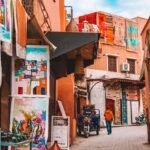
Beyond the purchase itself, the beauty of the souks is the experience of immersing yourself in them: the labyrinth of alleys, the colours, the scents of spices, the bustle and the human contact. Haggling is just one part of that sensory immersion, which turns a simple purchase into an indelible memory of the trip. The atmosphere is half the reward.
There is no need to feel flustered or pressured; you can always decline politely and keep strolling. Taking it with calm and humour, enjoying the setting as much as the shopping, is the best way to experience the souks. In the end, more than the objects, it is the experience that stays with you. It is Morocco at its purest. The maze of alleys, the colours, the scents and the constant bustle turn a simple stroll through the souks into one of the most intense and memorable experiences of the whole country. Our 12 Days In Morocco Tour Itinerary From Casablanca immerse you in the complete experience of the Moroccan souks.
Shop the souks with Maktub Morocco Tour
Haggling in Moroccan markets is a social game and a cultural tradition, not a conflict: the seller opens high expecting you to negotiate, so open your counteroffer well below, advance with humour and courtesy, and be ready to walk away politely. Bargain with respect toward the artisan and aim for a price that is fair to both, without losing your smile. It is one of the most enjoyable parts of a Moroccan trip.
The team at Maktub Morocco Tour gives you time to explore the souks without rushing and to approach haggling with the right attitude, enjoying the full experience. To experience the magic of Morocco’s markets, get in touch using the button below. Our 4 Days From Marrakech To Fes Via Merzouga Desert are your gateway to the fascinating souks of Morocco.
Frequently Asked Questions
How do you haggle in Moroccan markets?
Haggling is a social game and a cultural tradition, not a conflict. The seller opens with a high price expecting you to negotiate, so do not show too much enthusiasm, open your counteroffer well below the starting price, and advance with successive counteroffers, always with humour and courtesy. Making as if to leave politely often improves the price. Aim for a price that is fair to both, and keep your smile throughout.
Is haggling expected everywhere in Morocco?
In the souks, for crafts, textiles, leather, spices and souvenirs, prices are rarely fixed and negotiating is expected, so haggling is the norm. In shops with marked prices, supermarkets and restaurants, however, you do not haggle. Taking part in the souk’s bargaining is also a genuine cultural experience worth having, so it is worth embracing rather than avoiding it.
How much should you haggle down in Moroccan souks?
As a common rule of thumb, open your first counteroffer well below the seller’s starting price, since they open high expecting the negotiation. From there you advance with successive counteroffers until you converge on a point that is fair for both. The goal is not to squeeze the seller to the last penny, but to reach a price both parties are happy with, keeping the exchange friendly.
What should I buy in the Moroccan souks?
The souks are a treasure of craftsmanship: Berber rugs and textiles, leather goods like babouche slippers and bags, ceramics and tiles, lamps and worked metal, spices, argan oil and natural cosmetics. Each city has specialities, Fez for leather and ceramics, Marrakech for variety, and the Berber regions for rugs. Buying directly from the artisan, when possible, guarantees authenticity and supports the local craft.