Why packing for Morocco is tricky
Packing for Morocco puzzles many travellers, and for good reason, because a single trip can span blazing desert days, cold Sahara nights, mountain passes and modern cities. At Maktub Morocco Tour we often meet visitors who packed only for heat and found themselves shivering after dark, so a well-planned bag genuinely shapes how much you enjoy the journey rather than endure it.
The golden principle that solves almost everything is layering. Morocco can be scorching at midday and surprisingly cold once the sun drops, and the Atlas Mountains crossed en route add still more variety to the thermometer. Dressing in layers lets you adapt on the fly, adding or shedding pieces as conditions change through a single day. This checklist walks through exactly what to pack, season by season, so you arrive ready for whatever the day and the altitude throw at you. Our Chefchaouen Day Trip From Fes cross landscapes of shifting climate for which it pays to be well prepared.
Clothing that works year-round
Some clothing belongs in your bag whatever the season. Lightweight, loose, breathable pieces in natural fabrics like cotton and linen are the backbone, because they let the skin breathe and cope well with heat. Light colours reflect the sun and keep you cooler than dark ones, and loose cuts are far more comfortable than tight clothing on long days out. These same fabrics also dry quickly, which is handy when you are washing a few things along the way.
Counterintuitive as it sounds, covering up often beats baring skin under the intense sun, and it aligns with Morocco’s fairly conservative culture. A light long-sleeved shirt shields you better than a t-shirt, and loose long trousers are more practical than shorts for full days of sightseeing. Packing a couple of versatile layers you can mix keeps the bag light without limiting your options, and it means one smart choice covers both the heat of the day and the rules of local courtesy. In the end, packing well for Morocco is the first step toward enjoying every moment of it. Our 6 Days Desert Tour From Tangier To Marrakech are enjoyed most when you travel light and well chosen.
Layering for cold desert and mountain nights
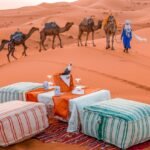
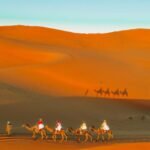
Here is the classic mistake we most want you to avoid: underestimating the cold. Once the sun sets, desert temperatures fall fast, and Sahara nights can be genuinely chilly outside high summer. That magical night around the fire and in the tent is far more enjoyable with the right clothing, and quite miserable without it, so this is not a corner to cut.
Pack a sweater or fleece and a warm jacket without fail for the evenings. In the colder months, a hat and light gloves are not overkill. The same warm layers earn their place in the early mornings and when crossing the Atlas Mountains, where it cools noticeably even in warm seasons. In the same day you can move from the dry heat of the dunes to the sharp chill of a high mountain pass. These pieces are the difference between watching the stars in comfort or shivering through it. It is easily the most avoidable mistake, and the one travellers who prevent it are most grateful for. Skipping this single layer is the mistake we see most often, and the easiest to avoid. Skipping this single layer is the mistake we see most often on the whole trip, and by far the easiest to avoid with a little foresight. Our Essaouira Day Trip From Marrakech include desert nights for which warm layers are essential.
Footwear, sun protection and the desert kit
For your feet, the most practical choice is comfortable closed footwear, such as trainers or light hiking shoes, which handle both medina cobbles and desert sand. Sandals are useful as a complement at the camp or for downtime, but your main footwear should be sturdy and comfortable for walking, since you will do a lot of it across cities and trails.
Sun protection deserves a prominent spot in the bag. A wide-brimmed hat, good sunglasses and high-factor sunscreen are essential under the desert sun. A scarf or chèche is especially valuable, shielding head and neck and doubling as a face cover if sand blows. A small daypack for water, sunscreen and a camera keeps essentials handy without hauling the whole suitcase to the dunes. These are small items that take up almost no room yet multiply your comfort enormously. Our 13 Day Absolute Morocco Tour From Tangier take you into the sand, where that kit is appreciated at every step.
Season-by-season adjustments
The base packing list flexes with the season. In spring and autumn, the sweet spots for visiting, comfortable daytime layers plus a warm evening jacket cover almost everything, and you rarely need extremes in either direction. These shoulder seasons are the easiest to pack for and the most forgiving of a light bag.
Summer calls for the lightest, most breathable clothing and serious sun protection, with the desert best enjoyed early and late in the day. Winter flips the emphasis toward warmth, with proper layers for cold nights, a warmer coat, and hat and gloves, especially for the desert and mountain passes, which can even see snow. Matching your bag to the season keeps you comfortable throughout. Our Chefchaouen Day Trip From Fes span seasons, and we advise on packing for your dates.
Small things that make a big difference
Beyond clothing, a handful of small items smooth the whole trip. A headlamp or torch is surprisingly useful at the camp, where there is no lighting, and a portable power bank keeps your phone charged far from sockets. A reusable water bottle, basic medicines, wet wipes and hand sanitiser round out a practical kit for a country where you spend long days out and about.
It pays not to overpack, since the desert and long road journeys are far more comfortable with a light, well-chosen bag. A small overnight bag with just the essentials for the desert camp saves dragging your whole suitcase to the dunes. Thinking your bag through with versatility in mind is what lets you stay comfortable without being weighed down. Our 6 Days Desert Tour From Tangier To Marrakech are enjoyed far more when you pack smart and light.
Pack smart with Maktub Morocco Tour
The key to packing for Morocco is layering: lightweight, loose, covering clothing in natural fabrics for hot days, and a sweater plus a warm jacket for the sharp cold of the nights. Add comfortable closed footwear, strong sun protection with a hat and scarf, and small essentials like a headlamp, power bank and water bottle, and you are ready for blazing dunes, cold Sahara nights and everything in between.
The team at Maktub Morocco Tour knows the shifting climate of southern Morocco intimately and is glad to advise on exactly what to pack for the season of your trip. To plan a desert adventure where you stay comfortable throughout, get in touch using the button below. Our Essaouira Day Trip From Marrakech are your gateway to a Morocco you enjoy to the full because you came well prepared.
Frequently Asked Questions
What should I pack for a trip to Morocco?
The key is layering: lightweight, loose, breathable clothing in cotton or linen for hot days, ideally covering arms and legs, plus a sweater or fleece and a warm jacket for the sharp cold of desert nights. Add comfortable closed footwear, a wide-brimmed hat, sunglasses, high-factor sunscreen and a scarf for sun and sand, along with a headlamp, power bank and reusable water bottle.
Is it cold at night in the Moroccan desert?
Yes, much colder than people expect. Once the sun sets the temperature drops fast, and Sahara nights can be genuinely chilly outside high summer. That is why it is essential to pack a sweater or fleece and a warm jacket; in the colder months, a hat and light gloves too. The desert camps provide warm blankets, so with the right layers the night is perfectly comfortable.
What footwear is best for Morocco?
The most practical choice is comfortable closed footwear, such as trainers or light hiking shoes, which handle both medina cobbles and desert sand. Sandals work as a complement at the camp or for downtime, but your main footwear should be sturdy and comfortable, since you walk a great deal across cities and trails. No special footwear is needed for the camel ride itself.
How should I dress in Morocco out of cultural respect?
Morocco is a mostly Muslim country with fairly conservative customs, so it helps to have clothing that covers shoulders and knees, especially in villages, rural areas and religious sites. This is particularly relevant for women, though you do not need to cover your head except when entering certain religious spaces. A scarf in your bag easily solves those situations, and light, loose, covering clothes suit both heat and respect.